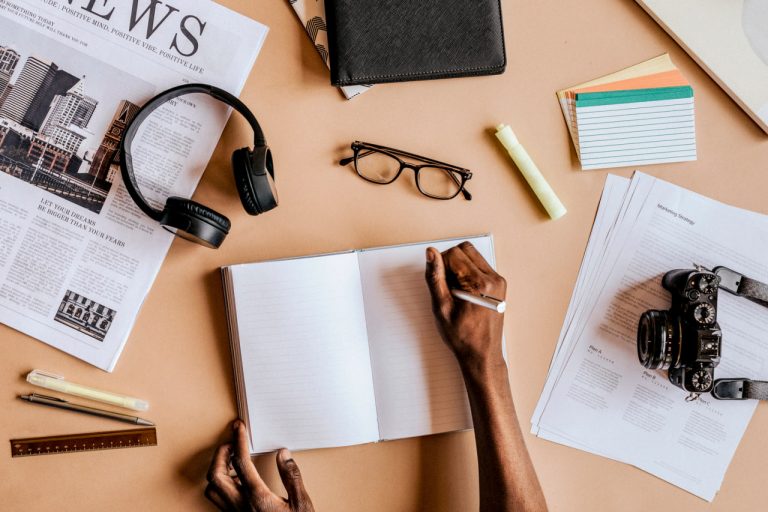
Interviews are the backbone of journalism.
They give you the quotes, insights and perspectives that help take your piece from a series of facts and turn it into a narrative that really sings. But interviewing isn’t just about asking questions, it’s also about preparation, listening, flexibility and learning how to connect with people.
Being skilled at all of these things will help you elicit better information from your sources while still being a professional and upholding the ethics of your organization. Done well, an interview can help you ferret out details you wouldn’t have found, explain something complicated in a clearer way, and add context you can’t get from a Google search. So it’s worth learning how to do them well. Preparation: Research Before the Interview Preparation is key to a successful interview.
You need to research the topic, the situation and the person. Understanding the topic at hand will help you ask informed, relevant and respectful questions. Research means going through what your interviewee has said in the past, public records and social media accounts, and relevant media coverage. Understanding the key points of the issue will allow you to ask informed questions and follow up when the interviewee says something that doesn’t add up. You’ll also want to decide whether you’re going to conduct the interview in person, over the phone or via video call, and make sure that you have the right equipment to record the interview.
Crafting Effective Questions Your questions will make or break the interview. You’ll want a mix of open-ended questions that encourage the interviewee to talk at length, and closed-ended questions that help you nail down the facts. Open-ended questions are great for encouraging the source to talk at length and elaborate on their points, and can help you get some fantastic quotes for your piece. Closed-ended questions are better for pinning down facts. What time did that take place? How many people were there? Who else was involved? Was this the first time that had happened? It’s best to ask clear, concise questions that are easy to understand.
Avoid asking leading or biased questions, as they may influence your interviewee’s response. You also want to make sure that you’re asking questions that are likely to help you learn something new or get some additional insight, and avoid questions that aren’t relevant or that you already know the answer to. Going into the interview with a list of questions you want to ask can help you make sure that you cover the topics you need to, but it should be a fluid list that you can adjust as you need to throughout the course of the conversation. Building Rapport with Sources Establishing trust with your sources is one of the best ways to get them to open up to you.
So establish a rapport with your source. Start with a friendly introduction, and maintain a professional demeanor. People will talk to you more freely if you seem empathetic, genuinely interested in what they have to say and willing to hear them out. Remember to maintain eye contact and show that you’re engaged with the conversation. Little things, like saying “uh-huh” to show you’re following along, can go a long way toward putting someone at ease and encouraging them to share their story with you. Listening Actively and Following Up Remember, an interview is a conversation. That means you need to listen actively. Pay attention not just to what the person is saying, but also to their tone of voice, body language and the words they’re using.
If they hesitate over a point, seem evasive or emotional, it may be worth following up on. You can also use follow-up questions to get someone to expand on a point, or to clarify something they said that wasn’t clear. Follow-up questions can also be useful in pinning down a fact or statement that the source made that seems incorrect. Don’t be afraid to interrupt someone to get a point clarified, it’s better to do it now than to have to do a follow-up interview later to get the information right. You can also use the interview itself to fact check. Repeat back what you’ve heard to make sure you understand correctly, and ask the interviewee to confirm basic facts (name, title, age, etc.).
If you can, use a recorder to tape the conversation so you can check quotes and facts later. Avoid getting distracted during the interview. Instead of taking notes on your laptop or phone, consider using a notebook and pen. Not only will you be less likely to get distracted by email or social media, but it will also make it easier to take notes, as you won’t have to balance a laptop or try to type on a tiny phone keyboard. Dealing with difficult or reluctant sources If they’re on the record, they might be scared, hostile, or belligerent. Again, maintain professionalism. How to deal with reluctant sources Neutral language Nonconfrontational questions Explain the purpose of the interview Show the source that you have done your homework and are prepared. Patience and persistence to get answers.
Recording and documentation It’s imperative to document statements and quotes correctly. Record the interview (after obtaining the source’s permission) Take notes during the interview, listen, and watch for visual clues to identify what is newsworthy or relevant. After the interview, organize and review your recordings and notes to catch quotes, facts, and information that you might have missed during the interview. Proper documentation helps prevent misquote and misrepresentation.
Ethical considerations during the interview The golden rule of journalism is to be fair and transparent. Don’t mislead your sources. Respect your sources. Deal fairly with people involved in the story. Get consent to record the interview. Promise of anonymity (only when you have agreed to it). Be honest about your identity and purpose. Do not distort or manipulate the message. Do not take quotes out of context. Be transparent about methods and intentions. Never betray confidence. Do not plagiarize. Maintain your integrity. Legal considerations for publication. Keeping the organization’s credibility. Types of interviews There are various types of interviews such as face-to-face, phone, video conferencing, and email interviews. Each type has its unique requirements and characteristics.
Face-to-face interview advantages Observation of body language, facial expressions, and gestures. An opportunity to develop a relationship. Disadvantages Needs planning. Logistical considerations such as location, date, and time. Phone interview advantages No logistical considerations. Disadvantages Difficulty to observe body language. Video conferencing advantages No logistical considerations.
Observe body language. Disadvantages Technology issues. Email interview advantages No logistical considerations. No technology issues. Gives ample time to prepare answers. Disadvantages Limited opportunity to follow up. Limited opportunity to develop a relationship. Getting the story from the interview The key to getting the story from the interview is to be able to identify what is newsworthy or relevant information for the reader. Combine quotes, background information, analysis, and explanation to tell the story. Use the attributed quote to tell the story but make sure to add background information, analysis, and explanation to contextualize the story.
Getting the story from the interview. How to get the story from the interview Identifying newsworthy information. Provide context to the story. Ask follow up questions. Review and analyze interview data. Use quotes and tell the story. Putting it all together. Learning from interviews and improvement There’s always room for improvement. Conducting an interview is an art that can be mastered over time with practice. To master the skill of conducting an interview: Review interviews. Seek feedback. Reflect and evaluate. Experiment with questions. Develop strategies to handle difficult sources. Learn from others.